Short Answer
Have you ever gazed at the array of vibrant belts worn by practitioners of Brazilian Jiu-Jitsu (BJJ) and pondered the intricacies of this martial art’s honourable ranking system? The colourful belts that adorn the waist of each practitioner not only signal their skill level but also embody a journey of dedication, perseverance, and metamorphosis. In this article, we will delve deep into the Jiu Jitsu belt order, elucidating the ranking system and progression towards mastery. Are you ready to untangle this enigma and perhaps challenge yourself along the way?
Before we navigate the spectrum of belt colours and ranks, it is essential to understand that the belt system is more than just a hierarchy. It is a representation of a practitioner’s commitment to learning, self-improvement, and the ethos of the art. The progression through the belts is often accompanied by an evolving understanding of techniques and an increasing ability to adapt them in various scenarios. With that said, let’s embark on this enlightening journey through the ranks of Brazilian Jiu-Jitsu.
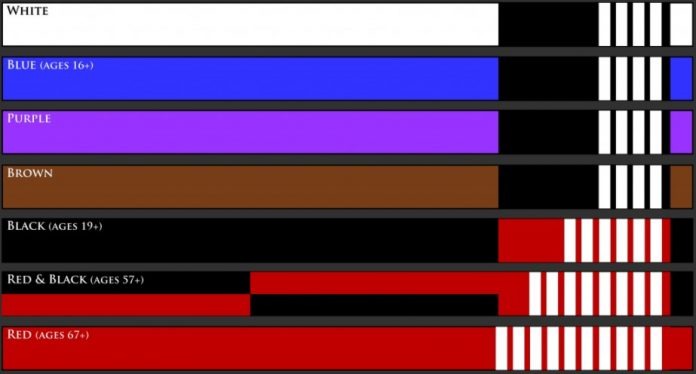
At the foundation of BJJ’s ranking system lies the white belt. This initial strap signifies a novice—a blank canvas awaiting the brush strokes of knowledge and experience. White belts learn basic techniques, positions, and the philosophy behind the art. They are encouraged to embrace their ignorance and approach their training with an open mind. It is during this phase that one often grapples with their own limitations, resulting in valuable lessons that will shape their future development.
As practitioners immerse themselves in the art, they may eventually ascend to the blue belt. This stage represents a significant transformation, where the individual begins to internalise essential techniques and develops a deeper understanding of fundamental principles. Blue belts are often more confident and nuanced in their approach on the mats. While they possess a foundational skill set, the blue belt also embodies a testing ground—a time when practitioners refine their techniques and begin to formulate their own unique styles.
Next in the hierarchy is the purple belt, a mark of a practitioner who has solidified their knowledge and skills. Achieving this rank is no small feat; it often takes several years of dedicated training. Purple belts are considered advanced students, delving into the complexities of both offensive and defensive strategies. This stage emphasises creativity in applying techniques and encourages practitioners to experiment with various styles, thereby cultivating their individual prowess. Essentially, purple belts are poised at the precipice of mastery, navigating a delicate balance between artistry and technical execution.
Following the purple belt comes the brown belt, a symbol of expertise nearing fruition. At this juncture, practitioners are highly proficient, possessing in-depth understanding and execution of techniques. Brown belts begin to take on mentorship roles, guiding lower ranks and contributing to the collective knowledge of their training community. The learning curve remains steep, as practitioners further explore advanced techniques, often integrating various aspects of the sport such as self-defence, strategy, and competition. Notably, the brown belt stage is critical—often described as the final stretch before graduation to black belt status.
And finally, we reach the revered black belt—a pinnacle of accomplishment and respect within the BJJ community. However, even this achievement is not the end of the journey. Contrary to popular belief, earning a black belt is merely an entry point into the realm of true mastery. Practitioners continue to train, learn, and develop, often exploring deeper philosophies and techniques that eluded them during their earlier years. The black belt signifies a lifelong commitment to the art of Jiu-Jitsu and emphasizes the importance of continuing education and growth.
It is worth noting that the journey to black belt is often peppered with various degrees and distinctions, represented by additional coloured bands or stripes. These signify the years spent honing one’s skills and the achievements within the black belt rank. A first-degree black belt, for instance, is indicative of at least one year of continued training after receiving the black belt, with subsequent degrees progressively recognising a practitioner’s contributions to the art over time.
As you reflect on this pathway through the belts, one might ask: how do you envision your own journey through the BJJ ranks? Will you indulge in the intricacies of each stage, or will you race towards the black belt, potentially bypassing the valuable lessons embedded within the earlier ranks? The progression system is not merely a race; it is a labyrinth of information, skill refinement, and personal growth. Every belt change represents not only a new set of skills but also a transformative phase in a practitioner’s way of life.
Moreover, it is imperative to understand that each gym may have its variations in colour schemes and progression systems. For example, certain academies may have a different emphasis on the coloured belts or even include additional ranks such as the red belt for high-level practitioners. Regardless of the specifics, the underlying philosophy remains consistent: dedication to learning and execution, coupled with a respect for one’s peers and the art itself.
In conclusion, the Jiu Jitsu belt order and ranking system encapsulate more than just a superficial hierarchy of colours. They serve as a profound testament to an individual’s journey through the dynamic landscape of Brazilian Jiu-Jitsu. As you work towards your own aspirations, consider the lessons at each stage, the commitment required, and the richness of experiences that await you on the mat. Will you choose to immerse yourself fully in the beauty of this art, or will you merely skim the surface? The choice, as always, lies within your hands.
FAQ
What is the order of Jiu Jitsu belts?
The order of Jiu Jitsu belts is white, blue, purple, brown, and black.
How long does it take to achieve each belt in Jiu Jitsu?
The time to achieve each belt varies, but typically it takes about 1-2 years for blue, 2-3 years for purple, and 3-4 years for brown, with black belts requiring at least 10 years of dedicated practice.
What does each belt color signify in Jiu Jitsu?
Each belt color signifies a practitioner’s skill level, with white representing a beginner, blue showing foundational knowledge, purple indicating advanced skills, brown symbolizing expertise, and black representing mastery.



Leave a Reply