Short Answer
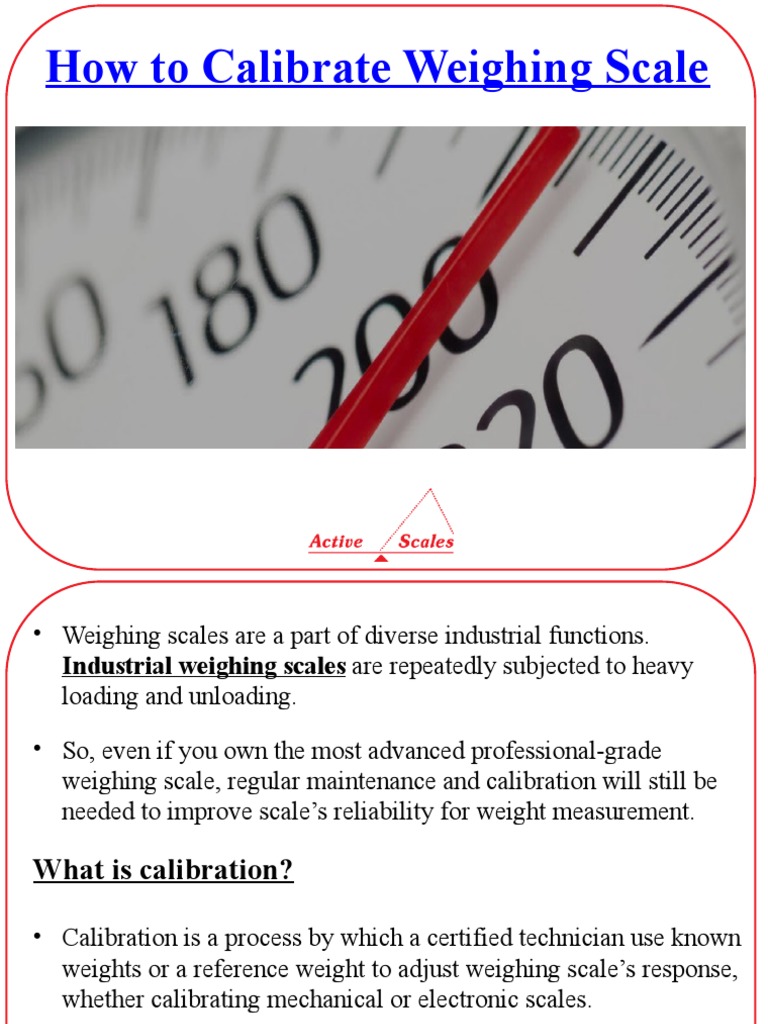
Calibrating a scale is a fundamental task that ensures accurate and reliable measurements, which is essential in various fields ranging from cooking to scientific research. Despite the apparent simplicity of weighing items, the intricacies of scale calibration often elude many, leading to persistent inaccuracies and misunderstandings. Below, you will discover a thorough exploration of how to calibrate a scale, with an emphasis on common observations that often fuel a fascination with precision and measurement.
Before embarking on the calibration journey, it is vital to understand why accuracy in weighing matters. Accurate scales are integral to numerous applications, including healthcare, where they can directly influence medical dosages, and in culinary practices, where precise measurements can determine the success of a recipe. The calibration of a scale not only rectifies discrepancies but also instills confidence in the integrity of the measurements.
Understanding Your Scale: The first step in the calibration process involves a comprehensive understanding of the specific type of scale you are using. Scales can be mechanical, digital, or analytical, each requiring unique calibration techniques. Familiarise yourself with the scale’s manual, which often contains essential information regarding calibration procedures and specifications. Knowing whether your scale operates on a spring mechanism, load cells, or a combination of both will enable you to proceed effectively.
Gather Your Tools: Equipping yourself with the right tools is crucial for proper calibration. Most importantly, you will need standard weights, which are specifically designed for calibration purposes. These weights should be verified with traceability to recognised standards. In addition, you may require a clean, stable surface on which to place your scale, ensuring that the environmental factors are controlled. Avoid surfaces prone to vibrations or temperature fluctuations, as these can adversely affect the calibration outcome.
Preparing the Scale: Prior to calibration, ensure that the scale is powered on and allowed to warm up as per the manufacturer’s recommendations. This step is essential, especially for digital scales, which may require a warm-up period for stabilisation. If your scale has a tare function, ensure to reset it to zero. This allows for an accurate starting point for your calibration process. Lastly, ensure that the scale is clean and free of any debris or residue that may interfere with the measurement.
Calibration Procedure: The calibration process itself is methodical and requires a step-by-step approach:
- Zeroing the Scale: Start by placing nothing on the scale. The digital display should read ‘0.00’. If it does not, use the tare function or recalibrate to adjust it accordingly.
- Using Standard Weights: Place a standard weight on the scale. For example, if you are using a 500g standard weight, ensure it is accurately positioned in the centre of the weighing platform for optimal measurement.
- Recording the Measurement: Observe the reading on the scale. It should ideally display ‘500g’. If it does not, note the discrepancy between the actual weight and the scale’s reading.
- Adjusting Calibration: If necessary, access the scale’s calibration settings, often found under a specific calibration mode in the digital display. Adjust the reading accordingly, bringing it in line with the actual weight of the standard used.
- Repeat for Accuracy: To ensure consistency, it is advisable to repeat the above steps with multiple standard weights across the scale’s capacity range. For instance, using weights of 100g, 200g, 500g, and 1000g will verify that the calibration is uniform across varying loads.
Final Verifications: Once adjustments have been made, it is pertinent to double-check the scale’s accuracy. This involves placing the standard weights back onto the scale to verify that each reading corresponds accurately to the expected value. This verification process not only confirms the calibration but also provides an opportunity to observe how the scale reacts to varying weights, further deepening your understanding of its functionality.
Consider Environmental Factors: It is crucial to acknowledge the environmental factors that might impact scale performance. Factors such as humidity, temperature, and air pressure can cause fluctuations in measurements. A scale placed in a drafty area or exposed to direct sunlight can yield significantly different readings. Therefore, consider calibrating your scale regularly, especially in environments prone to such changes.
Maintaining Your Scale: Beyond calibration, the long-term accuracy of your scale can be enhanced through proper maintenance. Regular cleaning, careful handling, and routine inspections will go a long way in preserving the scale’s integrity. In addition, storing the device in a protective case when not in use can prevent physical damage.
As we conclude, the art of scale calibration is both a practical necessity and a fascinating pursuit. By understanding the meticulous process behind ensuring precise measurements, one can appreciate the underlying mechanics that govern our everyday world. Whether for professional or personal use, learning how to calibrate a scale opens the door to a realm of accuracy and reliability that is paramount in our quest for knowledge and excellence in various applications of measurement.
FAQ
Why is scale calibration important?
Scale calibration is essential to ensure accurate and reliable measurements, which can significantly impact various applications, from cooking to healthcare.
What tools do I need to calibrate a scale?
You will need standard weights, a clean and stable surface, and possibly specific tools as outlined in your scale’s manual.
How often should I calibrate my scale?
It is advisable to calibrate your scale regularly, especially in environments prone to fluctuations in humidity, temperature, or air pressure.
FAQ
Why is scale calibration important?
Scale calibration is essential to ensure accurate and reliable measurements, which can significantly impact various applications, from cooking to healthcare.
What tools do I need to calibrate a scale?
You will need standard weights, a clean and stable surface, and possibly specific tools as outlined in your scale’s manual.
How often should I calibrate my scale?
It is advisable to calibrate your scale regularly, especially in environments prone to fluctuations in humidity, temperature, or air pressure.

Leave a Reply