Short Answer
When it comes to precious gemstones, few evoke as much intrigue and wonder as pearls. These lustrous orb-like wonders have captivated humans for millennia. Furthermore, the question of their worth engages collectors, jewellers, and casual admirers alike. Understanding how much a pearl is worth requires a keen understanding of several factors, including its grading, the intricacies of the market, and the nuances of personal desire. In this exploration, we will unravel the complexity of pearl valuation and the profound allure they hold.
1. The Alluring Origin: Nature’s Craftsmanship
The value of a pearl is intrinsically linked to its origin. Unlike most gemstones, pearls are formed within living organisms – mollusks. The process is both fascinating and complex. When an irritant infiltrates the mollusk, it responds by secreting layers of nacre, a combination of aragonite and conchiolin. Over time, these layers accumulate, eventually producing a pearl. This natural crafting grants pearls a unique and organic allure, elevating their worth above that of many gemstones which are mined.
2. Grading Criteria: The Five Key Factors
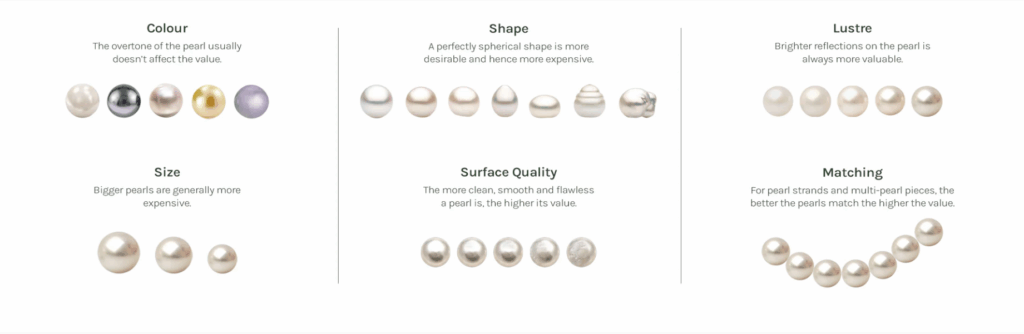
To ascertain a pearl’s value, experts rely on a structured grading system that focusses on five primary factors:
- Size: Pearls can range from tiny seed pearls to substantial ones measuring over a few centimetres. Generally, larger pearls command higher prices due to their rarity.
- Shape: While round pearls are often deemed most desirable, other shapes such as baroque, drop, and semi-round are appreciated for their unique characteristics and charm.
- Surface Quality: A pearl’s surface can be smooth or blemished, and the presence of imperfections can significantly affect its value. As such, well-nurtured pearls with minimal flaws are preferred.
- Colour: Pearls come in a spectrum of colours, including white, cream, pink, black, and various shades in between. The richness and depth of hue can add to the allure and price.
- Lustre: This refers to the sheen of the pearl and reflects how light interacts with its surface. High-quality pearls exhibit a deep, reflective lustre, enhancing their overall desirability.
3. Types of Pearls: A Varied Market
Within the realm of pearls, there are several distinct types, each carrying its own market value based on the aforementioned grading criteria. Major varieties include:
- Akoya Pearls: Renowned for their classic round shape and pristine lustre, Akoya pearls are cultivated mainly in Japan and are highly sought after in fine jewellery.
- Tahiti Pearls: Often referred to as black pearls, Tahitian pearls exhibit a stunning range of colours. Their exotic nature and rarity contribute to their elevated market price.
- South Sea Pearls: These grand gems, known for their impressive size and silky lustre, are primarily harvested in Australia, the Philippines, and Indonesia. Their luxurious nature and limited supply command high prices.
- Freshwater Pearls: More accessible and diverse in shape and colour, freshwater pearls are cultivated primarily in China. While generally less expensive, the beauty they display can vary widely.
4. The Market Dynamics: Supply and Demand
The pearl market operates similarly to other luxury goods markets, influenced by supply and demand. Economic fluctuations, cultural trends, and even fashion choices can sway prices dramatically. During periods of heightened interest, prices for high-quality pearls soar. Conversely, economic downturns may lead to decreased demand, resulting in lower values.
5. The Emotional Component: Sentimental Value
Values in the world of pearls go beyond mere financial assessability. The emotional resonance tied to pearl jewellery, often gifted on significant occasions such as weddings or anniversaries, can impose a sentimental value that transcends market price. Personal stories intertwined with pearls elevate their worth in the eyes of the beholder, transforming a simple pearl into a cherished family heirloom.
6. Understanding Authenticity: The Role of Certification
In an era riddled with imitation and synthetic pearls, understanding authenticity is paramount. Certified pearls carry a guarantee of quality and origin, assisting buyers in making informed decisions. Reputable grading organisations assess pearls based on industry norms, providing documentation that assures buyers of their investment’s legitimacy. This adds an extra layer of confidence when navigating the pearl market.
7. Investment Potential: Pearls as Assets
Investors seeking alternative assets often consider pearls. While the market fluctuates, specific high-quality pearls – particularly rare varieties and fine South Sea pearls – possess the potential for appreciation. As tastes evolve, certain types of pearls may become highly sought after, allowing for capital growth. The allure of investing in pearls rests not only in the tangible aesthetics but also the prospect of financial gain.
8. Maintenance and Care: Preserving Value
Caring for pearls is essential for maintaining their lustrous appearance and value. Proper storage to prevent scratches, avoiding contact with harsh chemicals, and regular cleaning are paramount steps to ensure longevity. Pearls are organic gemstones and should be treated with a level of reverence befitting their natural beauty.
In conclusion, the intrinsic value of pearls lies in a harmonious blend of nature’s artistry, market dynamics, and personal attachment. From their mysterious formation to becoming treasured possessions, they continue to fascinate and enchant. With an understanding of grading, types, and market forces, one can delve deeper into the captivating world of pearls and appreciate the varied factors that influence their worth. Whether as an investment, a fashionable adornment, or a cherished keepsake, pearls hold a place of honour in the tapestry of human culture.
FAQ
What factors determine the value of a pearl?
The value of a pearl is determined by size, shape, surface quality, color, and lustre.
Are all pearls the same price?
No, different types of pearls like Akoya, Tahiti, and South Sea pearls have varying market values based on their characteristics.
How can I ensure that a pearl is authentic?
Look for certification from reputable grading organizations that guarantee the quality and origin of the pearl.
What is the best way to care for pearls?
Proper storage, avoiding harsh chemicals, and regular cleaning are essential to maintain the appearance and value of pearls.


Leave a Reply