
Concrete is one of the most ubiquitous materials used in construction, valued for its strength and durability. However, many people find themselves pondering the question of how long concrete actually takes to set. This curiosity is not merely academic; it reflects a deeper understanding of the construction process, which holds both practical implications and conceptual intrigue.
To unravel the complexities of concrete setting, let’s delve into its timeline, factors that influence setting time, and strategies for accelerating the process.
Understanding Concrete Setting Time
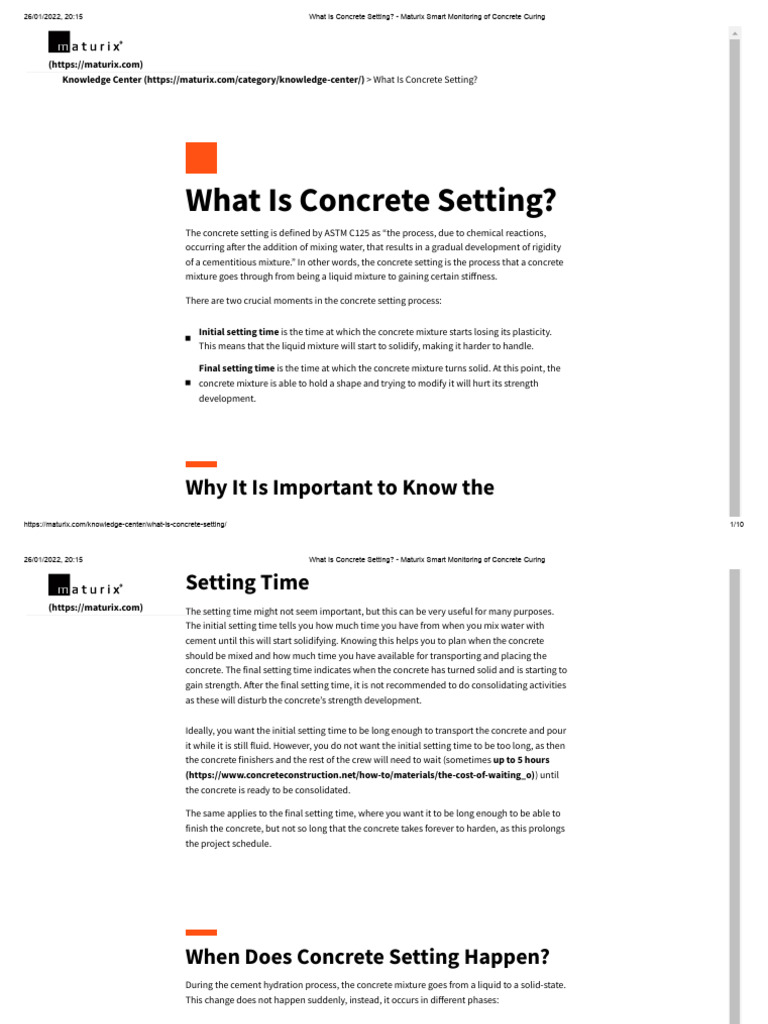
Concrete does not harden instantaneously; rather, it undergoes a series of chemical reactions known as hydration. When water is mixed with cement, a series of exothermic reactions occurs, resulting in a hardened structure. The time it takes for concrete to set can be broadly divided into three phases: initial set, final set, and full curing.
1. Initial Set
The initial set refers to the point at which the concrete begins to lose its plasticity and can no longer be worked or manipulated. This typically occurs within 1 to 2 hours after mixing, although factors such as the ambient temperature and the specific mix design can affect this timeframe. While you may be tempted to think of this as the ‘end’ of the setting process, it is merely the beginning of a transformative journey.
2. Final Set
The final set, on the other hand, indicates when the concrete has fully lost its workability. This usually occurs between 4 to 8 hours after the pour. During this stage, the concrete retains considerable strength but continues to undergo hydration reactions that enhance its durability. This time frame allows builders to execute essential tasks, such as finishing and curing, while still ensuring the concrete is structurally sound.
3. Full Curing
However, the journey does not end with the final set. Full curing of concrete can take anywhere from 28 days to several months, depending on various factors. Curing refers to the process of maintaining adequate moisture, temperature, and time to allow the concrete to reach its designed strength. During this period, the internal microstructure of the concrete continues to develop, becoming denser and more resilient.
Factors Affecting Concrete Setting Time
Several elements influence how long concrete takes to set. Understanding these can provide insight into how to manipulate the setting time according to your project’s needs.
A. Temperature
Concrete setting is significantly affected by temperature. Higher temperatures speed up the hydration process, leading to a shorter setting time. Conversely, cooler temperatures can prolong this phase. As a rule of thumb, every 10 degrees Celsius increase in temperature roughly doubles the rate of hydration. This relationship is essential for planning construction schedules, especially in regions with fluctuating weather patterns.
B. Humidity
The level of humidity in the environment also affects how quickly concrete sets. In highly humid conditions, moisture in the air can slow the evaporation process, allowing the hydration reactions to proceed uniformly. Conversely, low humidity levels may lead to rapid evaporation, which can cause surface cracking and other complications.
C. Mix Design
The specific mix of cement, additives, and aggregates can also dramatically impact setting time. For example, using a high-early-strength cement can reduce the time required for the initial and final sets, enabling faster construction schedules. Likewise, incorporating retarders can prevent premature setting in hot conditions, allowing for longer working times.
D. Water-Cement Ratio
A key factor is the water-cement ratio. A higher water content can lead to a slower setting time, while too little water can cause incomplete hydration and result in weaker concrete. Striking the proper balance is crucial for achieving optimal performance.
Speed-Up Tips for Setting Time
For those needing concrete to cure more rapidly, several strategies can be implemented to accelerate the process.
1. Use Accelerators
Adding chemical accelerators to the mix can significantly reduce setting times. Compounds such as calcium chloride can hasten the hydration process, leading to quicker strength gain. However, care should be taken, as excessive use may lead to issues like efflorescence.
2. Adjust the Mix
Optimising your concrete mix can also help in reducing setting times. Consider using a finer aggregate mix or incorporating certain additives designed for faster curing.
3. Warm Up the Mixture
In colder climates, heating the mixing water or aggregates can elevate the overall temperature, accelerating hydration. However, this must be done with caution to avoid thermal shock to the curing concrete.
4. Maintain Moisture
Utilising wet burlap or plastic sheeting to cover newly poured concrete can help maintain moisture levels, which allows for more even curing and reduces the risk of cracks that can occur with rapid drying.
In conclusion, understanding concrete’s setting time is vital for constructing durable structures. It’s not simply about how quickly one can complete a project but rather about ensuring the material receives the care it needs to develop strength and resilience over time. By adjusting various factors, one can optimise the process, ensuring both efficiency and quality in construction ventures.






Leave a Comment