
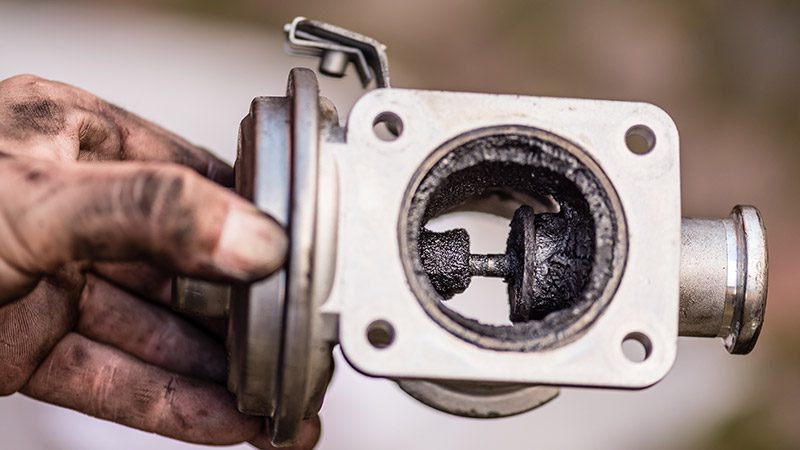
The Exhaust Gas Recirculation (EGR) valve is a critical component in modern internal combustion engines. Its primary function is to reduce nitrogen oxide (NOx) emissions, a significant contributor to smog and respiratory problems. Understanding its operation, types, maintenance, and potential issues is paramount for vehicle owners and automotive technicians alike.
What Exactly Does an EGR Valve Do?
At its core, the EGR valve recirculates a portion of the engine’s exhaust gas back into the intake manifold. This seemingly counterintuitive process lowers combustion temperatures. NOx forms when nitrogen and oxygen combine at high temperatures. By introducing inert exhaust gas, the peak combustion temperature is suppressed, leading to a significant reduction in NOx formation. Think of it as diluting the combustion mixture to keep it cooler.
The EGR valve typically operates under specific engine conditions: when the engine is warm, at cruising speeds, and under light to moderate loads. It generally remains closed during idle and wide-open throttle (WOT) conditions. This is because recirculating exhaust gas at idle can cause stalling, while at WOT, maximum power output is prioritized over emissions reduction.
Types of EGR Valves: A Comprehensive Overview
Several types of EGR valves exist, each employing different mechanisms for controlling exhaust gas recirculation. The most common types include:
- Vacuum-Controlled EGR Valves: These are the most traditional type. They rely on engine vacuum to open and close the valve. A vacuum signal, modulated by the engine control unit (ECU), actuates a diaphragm within the valve, which in turn controls the flow of exhaust gas. They are relatively simple and inexpensive but less precise than newer designs.
- Electronic EGR Valves: Electronically controlled EGR valves offer greater precision and control. They utilize an electric solenoid or stepper motor to regulate the valve’s opening. The ECU directly controls the solenoid or motor, allowing for more accurate adjustment of the exhaust gas recirculation rate based on various engine parameters.
- Digital EGR Valves: Digital EGR valves employ multiple on/off solenoids to control different exhaust gas flow rates. Each solenoid corresponds to a specific orifice size. By activating different combinations of solenoids, the ECU can achieve a wider range of EGR rates.
- Linear EGR Valves: Linear EGR valves use a position sensor to provide feedback to the ECU about the valve’s actual position. This feedback allows the ECU to continuously adjust the valve opening to maintain the desired EGR rate. They offer the highest level of precision and control.
Symptoms of a Failing EGR Valve: Recognizing the Warning Signs
A malfunctioning EGR valve can manifest in various symptoms, impacting engine performance and emissions. Common signs include:
- Rough Idling: A stuck-open EGR valve can introduce excessive exhaust gas into the intake manifold at idle, leading to a rough or unstable idle.
- Stalling: In severe cases, a stuck-open EGR valve can cause the engine to stall, particularly at idle or low speeds.
- Poor Fuel Economy: A malfunctioning EGR valve can disrupt the air-fuel mixture, resulting in decreased fuel efficiency.
- Check Engine Light: A faulty EGR valve will often trigger the check engine light, accompanied by diagnostic trouble codes (DTCs) related to the EGR system.
- Engine Knocking or Pinging: If the EGR valve is not functioning properly, combustion temperatures may increase, leading to engine knocking or pinging, especially under load.
- Failed Emissions Test: A malfunctioning EGR valve can result in elevated NOx emissions, causing the vehicle to fail an emissions test.
Maintaining Your EGR Valve: Preventive Measures and Cleaning Techniques
Regular maintenance can help prolong the life of the EGR valve and prevent premature failure. Key maintenance practices include:
- Regular Engine Oil Changes: Using high-quality engine oil and adhering to the manufacturer’s recommended oil change intervals helps prevent the build-up of carbon deposits, which can clog the EGR valve.
- Fuel System Cleaners: Periodically using fuel system cleaners can help remove deposits from the fuel injectors and combustion chamber, reducing the formation of carbon deposits in the EGR system.
- EGR Valve Cleaning: In some cases, the EGR valve can be cleaned to remove carbon deposits. This typically involves removing the valve and using a specialized EGR valve cleaner to dissolve the deposits. However, caution should be exercised as aggressive cleaning methods can damage the valve.
Troubleshooting and Diagnosing EGR Valve Problems: A Systematic Approach
Diagnosing EGR valve problems requires a systematic approach. Here are some steps to follow:
- Scan for Diagnostic Trouble Codes (DTCs): Use an OBD-II scanner to retrieve any DTCs related to the EGR system.
- Inspect the EGR Valve: Visually inspect the EGR valve for signs of damage, such as cracks or leaks.
- Check Vacuum Lines: For vacuum-controlled EGR valves, inspect the vacuum lines for leaks or blockages.
- Test the EGR Valve’s Operation: Use a vacuum pump or multimeter to test the EGR valve’s functionality according to the manufacturer’s specifications.
- Check the EGR Solenoid (if applicable): For electronically controlled EGR valves, test the EGR solenoid for proper operation.
- Monitor EGR Valve Position (if applicable): For linear EGR valves, use a scan tool to monitor the EGR valve’s position and ensure it corresponds to the desired EGR rate.
Replacing a Faulty EGR Valve: A Step-by-Step Guide
Replacing a faulty EGR valve is a relatively straightforward process, but it requires basic mechanical skills and tools. Before starting, consult the vehicle’s repair manual for specific instructions and torque specifications.
- Disconnect the Negative Battery Cable: This prevents accidental electrical shorts during the repair.
- Locate the EGR Valve: The EGR valve is typically located on the intake manifold or exhaust manifold.
- Disconnect Electrical Connectors and Vacuum Lines: Carefully disconnect any electrical connectors and vacuum lines attached to the EGR valve.
- Remove the EGR Valve: Remove the bolts or nuts that secure the EGR valve to the engine.
- Clean the Mounting Surfaces: Thoroughly clean the mounting surfaces on the intake manifold and exhaust manifold to ensure a good seal.
- Install the New EGR Valve: Install the new EGR valve, using a new gasket if required. Tighten the bolts or nuts to the specified torque.
- Reconnect Electrical Connectors and Vacuum Lines: Reconnect all electrical connectors and vacuum lines.
- Reconnect the Negative Battery Cable: Reconnect the negative battery cable.
- Clear Diagnostic Trouble Codes (DTCs): Use an OBD-II scanner to clear any DTCs related to the EGR system.
- Test the Vehicle: Start the engine and test the vehicle to ensure the EGR valve is functioning properly.
The Future of EGR Technology: Advancements and Innovations
EGR technology continues to evolve, driven by increasingly stringent emissions regulations. Future advancements may include:
- Cooled EGR Systems: Cooled EGR systems further reduce combustion temperatures by cooling the exhaust gas before it is recirculated. This can lead to even lower NOx emissions.
- Advanced Control Strategies: Sophisticated control algorithms will enable more precise and responsive EGR control, optimizing both emissions and engine performance.
- Integration with Other Emissions Control Systems: EGR systems will be increasingly integrated with other emissions control technologies, such as catalytic converters and particulate filters, to achieve comprehensive emissions reduction.
In conclusion, the EGR valve plays a vital role in reducing harmful emissions from internal combustion engines. Understanding its function, types, maintenance, and potential problems is crucial for maintaining a healthy and environmentally friendly vehicle. Regular maintenance and prompt repairs can help ensure the EGR valve operates effectively, contributing to cleaner air and improved engine performance.






Leave a Comment