Short Answer
As students navigate the labyrinth of educational systems around the globe, an intriguing question arises: How does the A-Level system in the UK compare to the GPA (Grade Point Average) system prevalent in the United States? This conundrum often leaves students pondering their academic trajectories and which pathways may prove most advantageous. Understanding the nuances between these two educational frameworks can illuminate the choices that lie ahead, especially for students contemplating overseas studies. It can also pose an intellectual challenge: how do educational values and grading systems differ in these two cultures? Let’s embark on a comprehensive exploration of A-Level equivalents in America, focusing on GPA, Advanced Placement (AP) courses, and the broader college admission landscape.
To begin with, let’s establish what the A-Level system entails. A-Levels, or Advanced Levels, are subject-specific qualifications that students typically undertake between the ages of 16 and 18 in the UK. These courses, often taken in a limited number of subjects, serve as a preparatory foundation for university education. Each A-Level subject is graded from A* to E, with students’ overall performance playing a pivotal role in university admissions. This contrasts dramatically with the American system, which employs a more inclusive and cumulative approach to student assessment.
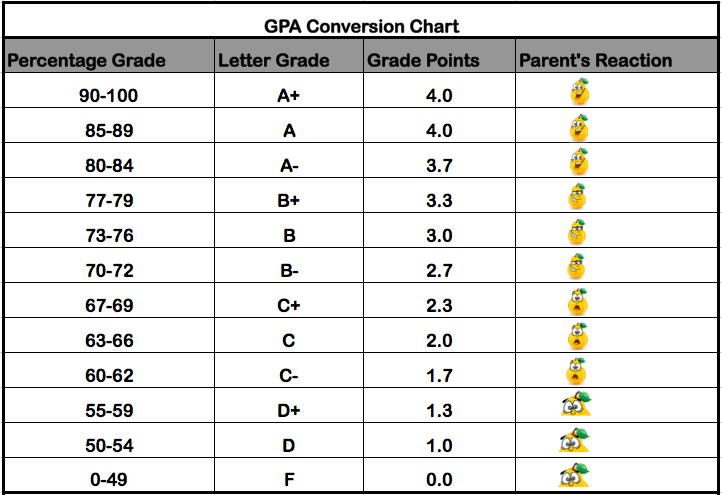
In the United States, the GPA system loses the simplicity of letter grades, instead opting for a numerical value ranging from 0 to 4.0, with grade weightings that can shift with the difficulty of coursework. A student receiving an A in an AP (Advanced Placement) course might earn a GPA of 5.0 due to the course’s rigor, while an A in a standard class would yield a 4.0. This nuanced calculation creates layers of complexity, shining a spotlight on the students’ ability to navigate both the depth and breadth of academic offerings.
When comparing A-Levels to GPAs, one quickly notices that the A-Level system focuses intently on a few subjects, allowing for deep dives into specific disciplines. Typically, students choose three to four A-Level subjects, which they study intensively. This concentrated focus on particular academic areas can be advantageous for students who have a clear career trajectory or field of study in mind. Conversely, the GPA system emphasises a more holistic educational experience. Students in American high schools are encouraged to engage in various subjects, ranging from core academics to arts and physical education, fostering a more well-rounded academic profile.
Now, let’s delve deeper into Advanced Placement (AP) courses, which act as a bridge between the British A-Level system and the American collegiate environment. AP courses are college-level classes offered to high school students, providing an opportunity to earn college credit whilst still in secondary education. Schools present numerous AP courses, including subjects as diverse as AP Calculus, AP Biology, and AP Literature. Students enrolled in these courses not only enhance their GPAs but also prepare for the rigours of university coursework.
For students familiar with A-Levels, the question may arise: How do the AP exams compare in difficulty and content? There are both similarities and differences. While A-Level exams typically require lengthy essays and complex problem-solving skills reflective of university expectations, AP exams often culminate in a single, high-stakes test at the end of the course. This difference in assessment methodology can pose a challenge for students transitioning from a format that includes continuous assessment throughout the course to one that hinges largely on a final examination.
In terms of university admission, the examination results of A-Levels and AP courses are similarly pivotal. American universities tend to placed significant emphasis on GPA as it encapsulates a student’s overall academic performance. However, AP courses can help students stand out in a crowded field of applicants. Universities also consider overall coursework, extracurricular activities, personal statements, and letters of recommendation. This multifaceted evaluation process forms a robust system that seeks to identify students likely to thrive in the complexities of higher education.
For international students, the conversion of A-Level grades to GPA can seem daunting. Fortunately, many resources exist to assist in this translation. For instance, an A-Level grade of A* is often considered equivalent to a GPA of 4.0, while an A may equate to around 3.7. However, each institution may employ its own conversion system. Thus, it’s imperative for students to troubleshoot these differences when applying to colleges, ensuring clarity and accuracy in their applications.
Yet amidst these deliberations lies a playful challenge: How does one harness the inherent strengths of both systems to create a compelling academic narrative? Students aiming for higher education must carefully craft their coursework choices, balancing A-Level strengths with American GPAs’ diverse offerings. The adroit student will capitalise on AP courses to demonstrate a willingness to embrace challenges while simultaneously using their A-Level results to underscore their subject mastery.
Ultimately, the interplay between A-Levels and the American GPA system offers students a unique opportunity to tailor their educational journey. Understanding these frameworks is not merely an academic chore; it is a strategic endeavour that can shape future academic and professional landscapes. As students emerge from this phase of their educational lives, they must foster adaptability and resilience—traits that will serve them well in both their immediate transition to university and the longer-term journey into professional arenas.
In conclusion, while the A-Level equivalent in America presents intricate nuances with GPA and college admissions, it offers a landscape ripe with possibilities. With thoughtful planning, diligence, and a proactive approach to coursework, students can confidently navigate both educational worlds, ensuring a bright and promising future.
FAQ
What is the A-Level equivalent in the American education system?
The A-Level system in the UK is often compared to the GPA system in the US, where A-Level grades can be translated into GPA scores. For instance, an A-Level grade of A* is typically equivalent to a GPA of 4.0.
How do AP courses relate to A-Levels?
AP courses are college-level classes offered in American high schools, similar to A-Levels, allowing students to earn college credit while in secondary education.
What is the main difference between A-Levels and GPAs?
A-Levels focus on a few subjects with in-depth study, while GPAs reflect a broader range of subjects and cumulative performance.
Leave a Reply