Short Answer
Have you ever pondered how much influence external factors have on your self-worth? What if your entire sense of identity hinged on the opinions and validations from others? Welcome to the intricate world of External Locus of Evaluation. Let’s delve deep into this psychological concept, explore its implications, and examine a few illustrative examples along the way.
Understanding External Locus of Evaluation
The term “external locus of evaluation” refers to the tendency of individuals to rely on outside sources for their self-assessment and validation. Instead of anchoring their self-worth internally, they measure their value based on the feedback, approval, and disapproval of others. This phenomenon is often rooted in cultural beliefs, societal norms, and personal relationships. It’s a compelling reflection of human nature—a quest for external affirmation.
But what does that mean in the grand scheme of your psyche? Imagine a person who won’t feel accomplished until a colleague praises their work. They meticulously await a nod from their superior after delivering a presentation, allowing that single gesture to define their self-esteem for weeks. This is the essence of external evaluation, where the approval of others becomes the beacon guiding personal achievements.

The Dichotomy of Internal vs. External Locus
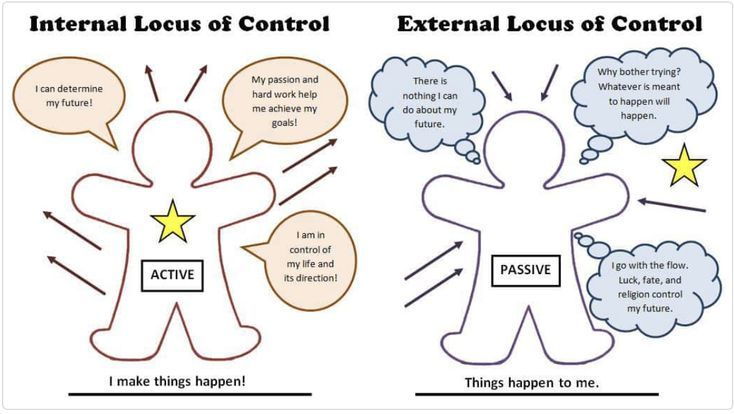
To appreciate the significance of an external locus of evaluation, it is essential to juxtapose it against its counterpart: the internal locus of evaluation. Individuals with an internal locus of evaluation attribute their self-worth to personal experiences and self-reflection. They derive satisfaction from their own achievements, even in the absence of external accolades. The battle between these two perspectives poses an interesting challenge—does relying on others for validation diminish one’s personal achievements or enhance communal relationships?
Aside from personal growth, the influence of family structures and education is monumental in determining whether an individual leans towards an external or internal locus of evaluation. Children raised in environments that excessively validate their achievements or emphasize conformity may develop a proclivity for external validation. Conversely, those encouraged to pursue passions and intrinsic motivations may cultivate a robust internal locus.
Examples of External Locus of Evaluation
Consider a high school student, Alice, who diligently studies to excel in her exams. Yet, rather than valuing the knowledge she acquires or her intrinsic love for learning, Alice fixates solely on her grades. The ecstatic cheers from her peers when she secures an A fuels her motivation, while the thought of failure stirs anxiety. In Alice’s world, her worth pivots precariously on numerical performance rather than on personal growth.
In another scenario, imagine Tom, an artistic individual whose creativity thrives on social media engagement. Tom crafts intricate pieces of art not for the pleasure of creation, but to garner likes and shares. Herein lies a formidable truth: the moment external feedback wanes, so does Tom’s enthusiasm. He becomes disheartened, preferring the fickle appreciation of virtual strangers over the silent gratification of creating for himself.
The Psychological Impact of External Validation
The repercussions of an external locus of evaluation extend beyond mere social interactions—they infiltrate the very fabric of mental well-being. Reliance on external validation can lead to a fragile self-esteem, characterised by volatility and anxiety. Individuals constantly seek approval, risking burnout and emotional depletion. Their identities become loosely intertwined with societal expectations, creating a precarious balance where self-worth ebbs and flows at the whims of external judgement.
The phenomenon of “imposter syndrome” serves as a poignant example of this psychological dynamic. Those grappling with this syndrome often over-attribute their successes to luck or external factors while fearing discovery as a fraud. Despite their accomplishments, they remain ensnared in a cycle of self-doubt, reliant on the validation of others for their self-acceptance.
Navigating the Challenges
<pThe path to autonomy and self-acceptance can be riddled with challenges for those steeped in external evaluation. How can one transition towards an internal locus, liberating oneself from the strings of external validation? Certainly, this invites further inquiry into personal motivations and beliefs.
Starting with conscientious self-reflection can foster greater self-awareness. Engaging in mindfulness practices allows individuals to recognise their intrinsic qualities, steering them away from the need for external approval. Setting personal goals, free from societal pressures, can likewise solidify self-worth grounded in individual achievements rather than contingent on the opinions of others.
Conclusion: Embracing an Internal Locus of Evaluation
Understanding and acknowledging the implications of an external locus of evaluation can catalyse a transformative journey towards a more resilient self-worth. While external feedback can enrich our lives, relying solely on it for validation can stymie personal growth. By embracing an internal locus of evaluation, we can cultivate a profound sense of self that thrives independently of external accolades. So, as you reflect on your validation sources, ask yourself: how much do you truly rely on others to define your worth? The answer may illuminate a new path toward personal empowerment.
FAQ
What is an external locus of evaluation?
An external locus of evaluation refers to the tendency to rely on external sources, such as others’ opinions and societal norms, for self-assessment and validation.
How does an external locus of evaluation affect mental health?
It can lead to fragile self-esteem, anxiety, and emotional depletion, as individuals constantly seek external approval.
What is the difference between internal and external locus of evaluation?
Individuals with an internal locus derive self-worth from personal experiences, while those with an external locus depend on others’ feedback.




Leave a Reply