Short Answer
In the realm of children’s literature, few duos have enchanted young imaginations quite like Roald Dahl and Quentin Blake. Their unanimous collaboration has produced a kaleidoscopic array of beloved tales that linger in the hearts and minds of readers well into adulthood. This delightful partnership weaves whimsical narratives enriched by Blake’s charismatic illustrations, making the experience of reading Dahl’s texts an interdisciplinary joy that transcends mere words. The alchemical blend of text and illustration transforms storytelling into a vivid feast for the senses, elucidating a fascination that continues to captivate generations.
To comprehend the sheer magic of Dahl and Blake, it is pertinent to delve into their histories. Roald Dahl, born in 1916 in Wales to Norwegian parents, had a life as dynamic and unpredictable as his tales. From an early age, he faced adversity—losing his sister and father in his childhood, experiences that no doubt infused his writings with depth and resilience. He later served as a fighter pilot during World War II, before venturing into the literary world. His psychogeographical landscapes are often reflective of his personal experiences; they are sprinkled with extraordinary characters that mirror parts of his identity.
Conversely, Quentin Blake was born in 1932 in Sidcup, Kent. With a penchant for drawing from a tender age, he pursued fine art and eventually became a prominent figure in British illustration. Blake’s style is distinctively loose and expressive, with the capacity to convey emotion with a mere flick of a brush. His illustrations are not merely decorative; they are an integral component of the storytelling, often expanding upon the text and enriching the narrative. The genesis of their collaboration began in the mid-1970s with the publication of “The Enormous Crocodile,” a book that would mark the onset of a historic partnership that would yield numerous classics.
What consistently draws audiences to the tandem of Dahl and Blake is the harmonious synergy between their crafts. Dahl’s narratives often embrace fantastical elements, featuring peculiar creatures and morally ambiguous characters, while simultaneously interlacing poignant life lessons. From the mischievous Matilda to the grotesque witches, Dahl’s characters possess a vividness that resonates with readers. He masterfully demonstrates that life is a blend of the extraordinary and the mundane; indeed, his works reflect a deep understanding of childhood fears and aspirations.
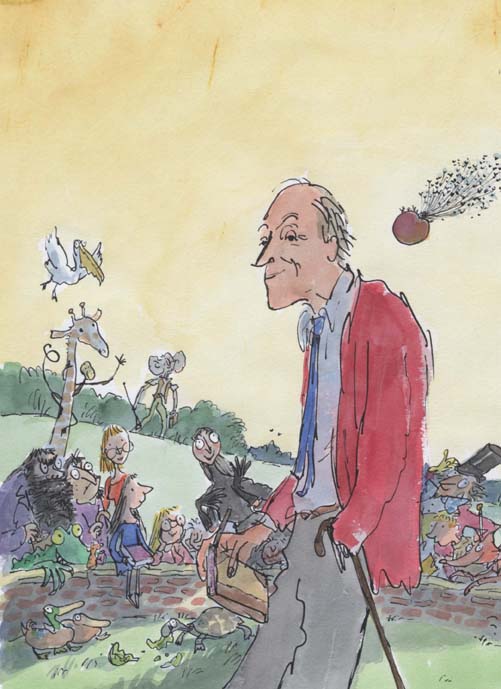
Quentin Blake’s illustrations enhance this literary atmosphere, offering a visual representation of the eccentric universe Dahl creates. His use of spontaneity and vibrant colour infuses energy into the characters and their experiences. Blake’s whimsical sketches encapsulate not merely what is on the page but ignite the emotions hidden within the lines. It is through Blake’s art that readers are introduced to the pitter-patter of magic surrounding Dahl’s every word, where the absurdity of the narrative is compounded through exaggerated expressions and movement.
One can ponder why this duo has become an indelible part of childhood literacy. A potential answer lies in their ability to evoke wonder. Dahl’s narratives harness the exhilarating electricity of imagination—the kind of wonder that makes a child’s heart race in anticipation. His stories transcend boundary lines, daring readers to embark on adventures that stretch their cognitive limits and challenge their understanding of what is possible. This cocktail of excitement is masterfully complemented by Blake’s illustrations that serve as both a visual anchor and a source of delight.
A recurring theme in Dahl’s writing is the journey of the underdog. Whether it’s Charlie Bucket’s triumph over poverty in “Charlie and the Chocolate Factory” or Matilda Wormwood’s revolt against parental ignorance in “Matilda,” readers find a sense of camaraderie with the protagonists. This appeal to fairness and justice strikes a profound chord within all of us, evoking empathy and encouraging us to reflect on our own narratives in a society often riddled with inequities. The triumph of good over evil is rendered all the more touching with Blake’s illustrations, which capture the nuances of each character’s emotional journey.
Moreover, the interplay between humour and darker themes in Dahl’s works invites reflection on childhood complexities. The absurdities and exaggerated events that occur are not merely for entertainment; they are gateways to discussing life’s hard truths. Death, loneliness, and struggles with authority are as prevalent in Dahl’s universe as laughter and joy. Consequently, the distinctive depth of the stories allows children—and adults—to contemplate deeper meanings while still reveling in the pure joy of storytelling.
This duo’s illustrious career has not merely produced stories; it has constructed a legacy. The resounding success of their collaborations has inspired adaptations across various media, from film to theatre, reiterating the timelessness of their creativity. The narratives have grown to embody universal values—friendship, bravery, and the importance of standing up for one’s beliefs—including themes that resonate across different cultures, facilitating their global popularity.
In looking back at their extraordinary partnership, one cannot help but marvel at how the synergy between Dahl’s words and Blake’s illustrations has crafted a tapestry woven with threads of imagination, insight, and humour. Their legacy continues to inspire and influence countless authors and illustrators, leaving an indelible mark on the literary landscape. Dahl and Blake together remind us of the enchanting power of stories, where the blend of text and image serves as a potent stimulus for our imaginations, nurturing a lifelong love for reading in all its multifaceted glory.
Ultimately, to explore the world of Roald Dahl and Quentin Blake is to embark on a journey that celebrates the wonders of childhood, invites introspection, and illustrates the transformative power of literature—a duo whose magical synergy will forever echo in the hearts of those who dare to dream.
FAQ
Who are Roald Dahl and Quentin Blake?
Roald Dahl was a British author known for his imaginative children's stories, while Quentin Blake is a British illustrator famous for bringing Dahl's characters to life with his unique artwork.
When did Roald Dahl and Quentin Blake begin their collaboration?
Their collaboration began in the mid-1970s with the publication of 'The Enormous Crocodile'.
How do Quentin Blake's illustrations complement Roald Dahl's writing?
Blake's illustrations add emotional depth and visual energy, enhancing the storytelling and making the characters vivid and memorable.
What are some common themes in Roald Dahl's books?
Common themes include the triumph of the underdog, imaginative adventures, humor mixed with darker childhood realities, and moral lessons.
Why is the Dahl-Blake partnership significant in children's literature?
Their partnership created a unique blend of text and illustration that has inspired generations, making their books timeless classics beloved worldwide.


Leave a Reply