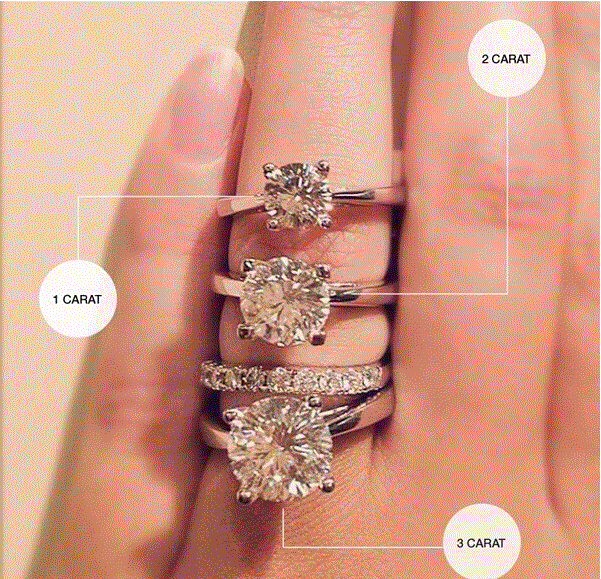
Short Answer
The decision to purchase a diamond ring triggers a multitude of emotions, as it signifies love, commitment, and a promise for the future. However, amidst the joy and anticipation, one question often looms large: “How much is a 3 carat diamond ring?” This article unravels the complexities of diamond pricing, diving deep into the luxury price breakdown that accompanies this significant jewellery choice.
When considering the cost of a 3 carat diamond, it is imperative to understand the various factors that influence its price. The quality, cut, carat weight, clarity, and colour—collectively known as the Four Cs—play a pivotal role in determining a diamond’s value. Each characteristic offers a distinctive perspective on the jewel’s overall allure, making it essential for potential buyers to grasp their implications.
1. Carat Weight: The ‘C’ That Matters Most
The carat weight of a diamond is perhaps the most straightforward aspect to comprehend. A carat is equivalent to 200 milligrams, with a 3 carat diamond weighing approximately 600 milligrams. However, the allure of carat weight does not solely rest on size; it also influences the pricing dramatically. Generally speaking, larger diamonds are rarer and thus command higher prices. For a well-proportioned 3 carat diamond, buyers might expect prices to start around £20,000 and can escalate to well over £60,000 depending on the quality.
2. Cut: Defining the Sparkle
The cut of a diamond transcends mere aesthetic appeal; it determines how well the diamond interacts with light. A diamond with an excellent cut will exhibit remarkable brilliance and sparkle, while a poorly cut diamond can appear dull, irrespective of its size. For a 3 carat diamond, an ideal cut can significantly enhance its value, sometimes adding several thousand pounds to its price tag. It is advisable for buyers to seek a round brilliant cut, which tends to optimise light performance.
3. Clarity: The Subtle Imperfections
Clarity evaluates the presence of inclusions and blemishes within a diamond. The scale ranges from Flawless (no inclusions visible under 10x magnification) to Included (inclusions easily visible to the naked eye). A 3 carat diamond with high clarity—such as VS1 or VVS2—will naturally attract a premium price, while diamonds with lower clarity grades will be more budget-friendly. Thus, becoming familiar with the clarity grades can facilitate informed decisions aimed at balancing quality with price.
4. Colour: The Nuances of Hue
Diamond colour grading measures how colourless a diamond is, with D being completely colourless and Z exhibiting noticeable colour. The upper range—D to G—encompasses the most sought-after hues and will elevate the price of a 3 carat diamond significantly. A D colour 3 carat diamond may command prices upwards of £70,000, while a J colour diamond may be more accessible at around £25,000. It’s thus critical for buyers to understand colour dynamics and choose according to personal preference, especially since the appearance of colour can subtly change under different lighting conditions.
5. Additional Factors Influencing Price
Beyond the Four Cs, several other elements can impact the price of a 3 carat diamond ring. The type of setting, for instance, can significantly alter the overall cost. A platinum band may incur additional costs compared to a gold setting due to its premium nature. Furthermore, brand prestige can also influence pricing. Renowned luxury jewellers often add a markup due to their perceived status, craftsmanship, and design uniqueness.
Moreover, the rise of ethical and lab-created diamonds has introduced new variables to diamond pricing. Lab-grown diamonds are typically priced 20-40% lower than their natural counterparts, making them an enticing option for budget-conscious shoppers who still desire an impressive carat weight. Thus, understanding the type of diamond one wishes to purchase is crucial in shaping the ultimate decision.
6. Budget Considerations: Finding the Right Balance
For potential buyers, establishing a budget is paramount. When setting an expenditure threshold, it’s important to consider not only the diamond’s price but also additional costs such as insurance, appraisal, and potential resizing of the ring. Some industry experts recommend spending two to three months’ salary on an engagement ring, although this guideline varies significantly depending on individual circumstances and personal financial situations.
Those venturing into luxury purchases should also give thought to future considerations; the resale value of a diamond can often be significantly lower than its original purchase price, especially if bought from a retailer with high markups. Educating oneself on market trends and seeking certification from reputable grading laboratories can aid in mitigating such risks.
7. Conclusion: The Emotional Investment
Purchasing a 3 carat diamond ring transcends mere financial expenditure—it embodies a profound emotional investment. By comprehending the intricacies of diamond pricing, potential buyers can make judicious decisions that harmonise desire, ethics, and economics. Whether seeking opulence or meaning, the perfect diamond awaits, ready to sparkle with stories of love and commitment for generations to come.
FAQ
What factors affect the price of a diamond ring?
The price of a diamond ring is influenced by factors such as carat weight, cut, clarity, color, and additional elements like setting type and brand prestige.
How much can I expect to pay for a 3 carat diamond?
Prices for a 3 carat diamond typically start around £20,000 and can exceed £60,000, depending on its quality.


Leave a Reply