Short Answer
Wall ties are often overlooked components in building construction, yet they play an essential role in ensuring the stability and integrity of walls, particularly in structures that combine different materials. The fascination with wall ties stems from their critical function and the engineering principles underlying their design and installation. This article delves into the purpose, types, and installation guide for wall ties, providing a comprehensive understanding of their significance in modern architecture.
Understanding Wall Ties: An Overview
Wall ties are metal or plastic fasteners that connect two layers of materials, usually masonry or brickwork, to each other and to the frame of a building. They are integral to the construction of cavity walls, which feature a gap between an inner and outer layer to improve insulation and prevent moisture ingress. Wall ties serve as a means of transferring forces between these layers, thereby enhancing structural stability.
When discussing wall ties, one must consider the dual roles they play. First, they provide lateral support, mitigating the effect of wind loading and preventing separation of the cavity walls. Second, they facilitate moisture drainage, allowing any seepage to escape without compromising the integrity of the inner layer. The need for effective wall ties arises from the complexities of building materials and environmental stresses, highlighting their importance in any construction project.
The Purpose of Wall Ties
At the heart of the purpose of wall ties is their functionality in maintaining structural integrity. Cavity walls are designed to be moisture-resistant and thermally efficient, but without proper ties, these systems would be vulnerable to environmental pressures and structural failure. By anchoring the outer layer to the inner layer, wall ties help to prevent bowing, cracking, and eventual collapse.
Additionally, wall ties aid in load distribution. In the event of an overload due to snow, wind, or other factors, wall ties ensure that stress is evenly dispersed throughout the structure, protecting both the wall’s aesthetic and structural components. This becomes particularly pertinent in regions prone to extreme weather, where the forces exerted on a building can be quite significant.
Types of Wall Ties
Wall ties are available in several variants, each designed for specific applications and materials. Understanding these types can elevate the quality of any construction project.
- Mechanical Wall Ties: Often made of stainless steel, mechanical wall ties are robust and resistant to corrosion. They utilize a specific anchoring mechanism to secure themselves in position, making them ideal for permanent installations in masonry construction.
- Plastic Wall Ties: These ties are an increasingly popular choice due to their lightweight nature and resistance to thermal bridging. While they may not bear as much weight as their metal counterparts, they are highly effective in reducing heat loss, thereby improving energy efficiency.
- Continuous Wall Ties: Used in constructions that require consistent tie spacing, continuous wall ties reinforce the wall’s resilience against environmental stressors. They create a continuous connection across the length of a wall, offering enhanced support.
- Base Ties: Specifically designed for the lower sections of walls, base ties secure the structure against lateral forces from the foundation, thus providing additional stability, especially in areas with unstable soil conditions.
Choosing the right type of wall tie is contingent upon various factors including the material of the wall, environmental conditions, and structural requirements. Each type serves a distinct purpose while contributing to the overall integrity of the construction project.
Installation Guide for Wall Ties
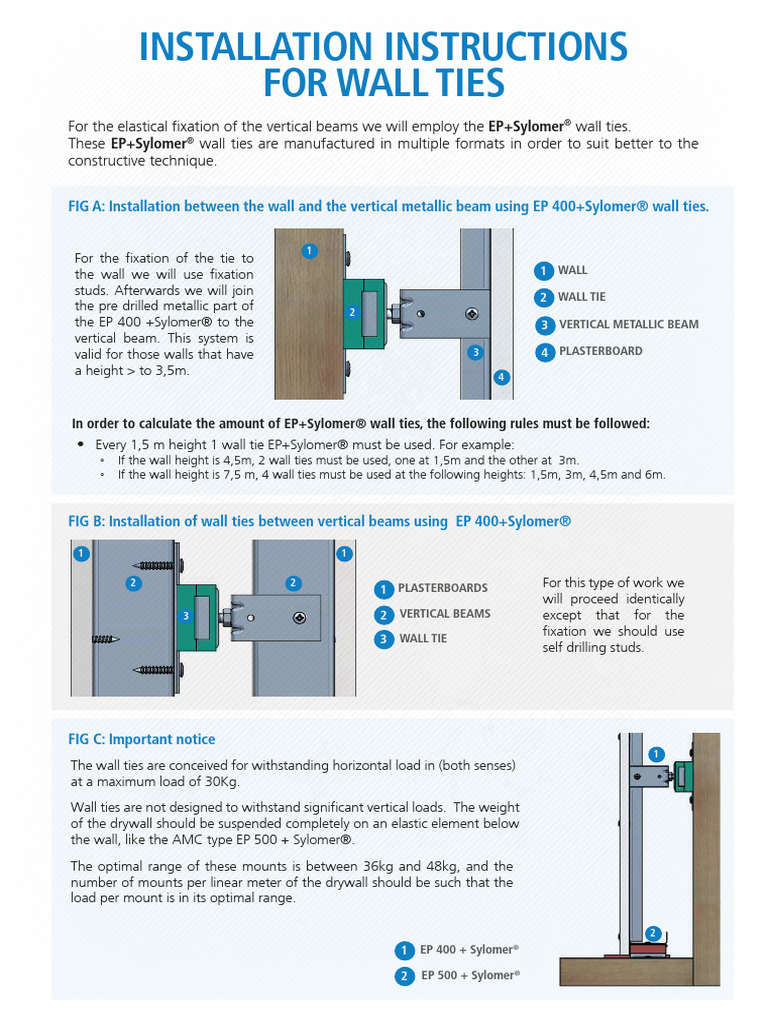
The installation of wall ties is a critical process that requires precision and attention to detail to avoid future structural issues. Here are the essential steps for proper installation:
- Planning the Layout: Before installation, carefully plan the positioning of the wall ties. They must be placed at specific intervals, typically every 600mm vertically and from the corners of the wall, to ensure complete coverage and effectiveness.
- Drilling the Holes: Using a masonry drill bit, create holes in the outer wall to accommodate the wall ties. The diameter of the holes should correspond to the type of ties being used and be deep enough for secure anchoring.
- Inserting the Wall Ties: Insert the ties into the drilled holes ensuring they are level and evenly spaced. For mechanical ties, ensure that the anchoring mechanism is fully engaged.
- Securing the Inner Layer: After placing the ties, secure the inner layer of the wall to the ties, ensuring that they are firmly locked in place to provide stability.
- Checking Alignment and Spacing: Once installed, double-check the alignment and spacing of the wall ties to ensure consistency. An improperly aligned tie can lead to significant structural issues in the future.
- Final Inspection: Conduct a thorough inspection of the installation, ensuring all ties are securely fastened and that there are no gaps or defects in the structure.
In conclusion, wall ties are not mere construction elements; they are essential components that contribute to the safety, stability, and longevity of a building. Their ability to seamlessly blend functionality with structural integrity offers a captivating glimpse into the intricate engineering behind modern architecture. By understanding the types of wall ties and following a meticulous installation guide, builders can ensure that their structures will stand resilient against the tests of time and nature.
FAQ
What are wall ties used for in construction?
Wall ties connect inner and outer layers of cavity walls, ensuring stability, preventing moisture ingress, and distributing structural loads.
Which materials are wall ties made from?
Wall ties are typically made from stainless steel or plastic, each chosen based on corrosion resistance and thermal efficiency needs.
How often should wall ties be installed?
Wall ties are usually installed every 600mm vertically and also near the corners of walls to ensure even support.
Can plastic wall ties bear the same load as metal ones?
Plastic wall ties generally bear less weight but are effective in reducing thermal bridging and improving energy efficiency.
Why is proper installation of wall ties important?
Correct installation prevents structural failure by maintaining wall alignment, stability, and moisture control.
Leave a Reply