Short Answer
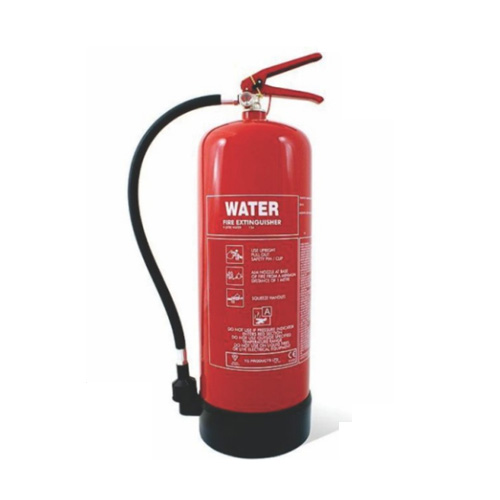
Water fire extinguishers, seemingly modest vessels of everyday utility, embody a flickering flame of safety within the tumultuous world of fire hazards. They stand as sentinels, ready to combat the wrath of flames with the simple yet profound power of water. Understanding how these devices function, their uses, and the accompanying safety rules is paramount for effective fire management.
At their essence, water fire extinguishers operate on a straightforward principle—quenching the fire with a copious flow of water. When unleashed, this transparent liquid cascades onto the flames, absorbing heat and thereby lowering the temperature to below the ignition point, rendering the fire impotent. This mechanism mirrors nature’s own restorative forces, akin to a gentle rain that douses a raging inferno in the wilderness, showcasing the brilliance of basic chemistry.
Water fire extinguishers are specifically designed to tackle Class A fires—those involving ordinary combustibles such as wood, paper, and textiles. Picture a stack of old newspapers, waiting to ignite amidst the dry summer heat; a water extinguisher is the hero that can halt that narrative before it evolves into a catastrophe. However, their efficacy diminishes dramatically against Class B (flammable liquids), Class C (gases), Class D (metals), and electrical fires. The betrayal of using water on these fire classes could provoke an explosive backlash, akin to pouring fuel onto an already simmering cauldron.
The design and function of water fire extinguishers are ingeniously simplistic. Typically, these extinguishers are constructed from robust steel, engineered to withstand high pressure. Inside, water is the primary agent, pressurised by either a gas propellant or a stored compressed air system. Upon activating the nozzle, pressure is released, and water is expelled in a powerful jet. The operator must aim at the base of the fire, just as one might direct a stream from a garden hose to water the roots, where the flames are most vulnerable.
Extinguishers come in various sizes to cater to specific environments—from compact 2-litre models, ideal for domestic use, to larger 9-litre versions designed for industrial applications. Choosing the correct size and type is crucial; an underperforming extinguisher may offer a false sense of security, while an oversized model can be unwieldy and impractical.
Moreover, specific usage scenarios shine light on the unique appeal of water fire extinguishers. In domestic settings, the presence of such an extinguisher becomes part of the family narrative—an unsung hero safeguarding homes filled with cherished moments. In commercial spaces, they serve as essential components of fire safety plans, reassuring employees and clients alike. Yet, the clarity of their necessity must be accompanied by a commitment to training and education in fire safety measures.
On a broader level, adhering to safety protocols enhances the efficacy of water extinguishers. The first rule is to ensure that all operators are familiar with the PASS technique—Pull, Aim, Squeeze, and Sweep. This method transforms a potentially chaotic encounter with fire into a choreographed performance of precision. Each step necessitates poise and assurance, which are crucial in emergency situations.
Additionally, regular maintenance cannot be overstated. Ensuring that extinguishers are charged and inspected annually is akin to regularly tuning a piano before a grand performance. A well-tuned extinguisher will respond flawlessly at the pivotal moment. Furthermore, one must always be aware of the extinguisher’s expiry date; neglecting this could lead to tragic consequences during critical situations.
One must also take heed of positioning; water fire extinguishers ought to be placed in conspicuous locations, yet out of the reach of potential fires. An invisible protector is no protector at all. Educating all members of a household or workplace on the extinguisher’s location and function fosters a culture of preparedness and vigilance.
While the focus remains on water fire extinguishers, it is prudent to consider the broader landscape of fire safety. Incorporating smoke detectors, fire blankets, and comprehensive evacuation plans crafts a safety net that is analogous to a tapestry—each thread woven with intention, creating a robust defense against fire. These measures, when combined with water extinguishers, form the bulwark against the chaos of an inferno.
In essence, the beauty of a water fire extinguisher lies not merely in its functionality but in its symbolic presence as part of a larger safety strategy. It marries simplicity with efficiency, creating an indomitable spirit that encapsulates hope. Fire, with all its ferocity, can be brought to heel by an elemental force. Thus, understanding the workings and rightful applications of water fire extinguishers not only empowers individuals but also ensures that more stories are initiated and concluding with triumph over tribulation.
Therefore, as guardians of safety, we must embrace water fire extinguishers as both tools and symbols. Equipped with knowledge and a proactive approach, every home and workplace can become a sanctuary rather than a mere setting in the story of risk.
FAQ
What types of fires can water extinguishers be used on?
Water fire extinguishers are primarily effective on Class A fires, such as those involving wood, paper, and textiles.
How should a water fire extinguisher be used?
Use the PASS technique: Pull the pin, Aim at the base of the fire, Squeeze the handle, and Sweep the nozzle side to side.
What maintenance is required for water fire extinguishers?
Regular maintenance includes annual inspections and ensuring the extinguisher is charged and within its expiry date.
FAQ
What types of fires can water extinguishers be used on?
Water fire extinguishers are primarily effective on Class A fires, such as those involving wood, paper, and textiles.
How should a water fire extinguisher be used?
Use the PASS technique: Pull the pin, Aim at the base of the fire, Squeeze the handle, and Sweep the nozzle side to side.
What maintenance is required for water fire extinguishers?
Regular maintenance includes annual inspections and ensuring the extinguisher is charged and within its expiry date.

Leave a Reply