
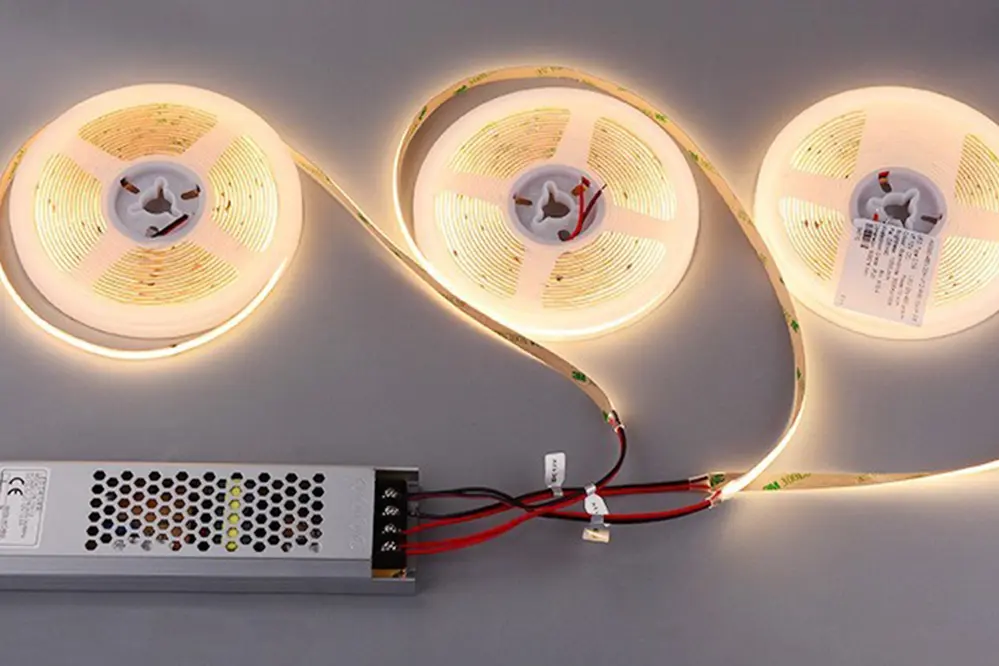
In the realm of modern lighting solutions, 24V LED strip lights stand out as a beacon of versatility and efficiency, igniting a transformation in the way we illuminate our spaces. They offer a compelling amalgamation of brilliance and adaptability, enabling both residential and commercial environments to be adorned with captivating lighting designs. But there’s much more beneath the surface of these luminous strips than mere aesthetics. Let’s delve into the nuances of power, brightness, and installation tips to illuminate your path to perfect lighting.
The Power Behind the Light: Understanding 24V Systems
At the heart of every LED strip lies its voltage. The 24V system has garnered significant popularity for several reasons. Primarily, the higher voltage reduces the current flowing through the LED strip, which results in less voltage drop over long distances. This characteristic ensures a more uniform brightness, circumventing those irritating scenarios where strips appear dimmer at one end.
Moreover, 24V LED strips exhibit heightened efficiency, especially when it comes to power consumption. They utilise less energy compared to their 12V counterparts while delivering superior luminosity. This efficiency translates not only into reduced electricity bills but also enhances the longevity of the strips, as they generate less heat. Hence, adapting a 24V LED system could seamlessly blend sustainability with visual appeal.
Brightness Decoded: Lumens vs Watts
When assessing the performance of LED strip lights, one must navigate the intricate world of lumens and watts. Lumens notably measure the total visible light emitted by a source, while watts reflect the energy consumption. In the context of 24V LED strips, a common perception is that more watts equate to brighter light, which can be misleading.
Instead, a more reliable measure lies in the lumens produced per watt. High-quality 24V LED strips typically generate between 500 to 800 lumens per metre. Therefore, when selecting your LED strip, a careful evaluation of lumens is imperative. Opting for strips with higher lumen output ensures vibrant illumination, vital for areas such as kitchens or task-oriented spaces.
Choosing the Right LED Strip Light: Factors to Consider
Embarking on the journey of selecting the perfect 24V LED strip light necessitates a thorough exploration of various factors. Firstly, consider the colour temperature. Measured in Kelvins, this dictates the appearance of the light, ranging from warm (around 2700K) to cool (6500K). Warm white light is often favoured for its inviting ambience in living spaces, while cool white light enhances concentration in work environments.
Furthermore, evaluate the density of the LEDs. Strips can be found with different LED densities, impacting both brightness and light distribution. A higher density, typically between 120 to 240 LEDs per metre, provides more consistent lighting, making it ideal for installations requiring uniform illumination.
Lastly, don’t overlook the strip’s IP rating, especially when contemplating installation in moisture-prone areas. An IP rating of at least 65 is advisable for applications in kitchens or bathrooms, ensuring robust protection against dust and moisture.
Installation Insights: Seamlessly Integrating LED Strips
The allure of 24V LED strip lights extends beyond their performance; they are surprisingly straightforward to install. Nevertheless, optimal installation is paramount to harness their full potential. Begin by meticulously planning your layout. A well-thought-out design not only maximises light efficiency but also elevates the aesthetic value of your space.
Before commencing the installation, ensure that the surface is clean and dry. Dust or moisture can hinder adhesion and compromise your lighting setup. LED strips typically come with an adhesive backing, facilitating attachment. For enhanced security, particularly in high-traffic areas, consider using mounting clips.
Moreover, when connecting the strips to a power supply, adhere rigorously to compatibility requirements. A mismatched power supply can lead to either inadequate performance or, in worst-case scenarios, damage to the strips. For 24V LED strips, a compatible 24V power supply is essential and should match the wattage requirements of the total strip length. It’s prudent to consult a power calculation guide to avoid underpowering or overpowering your lights.
Creative Applications: Brightening Your World
The versatility of 24V LED strip lights invites a plethora of creative applications. Utilise them to accentuate architectural features, create ambient lighting in dining areas, or illuminate shelving units to showcase decor. Furthermore, they are an excellent choice for outdoor settings, illuminating pathways or patios with a soft glow that enhances evening gatherings.
In commercial spaces, these lights can serve to draw attention to merchandise, improve visual branding, and enhance employee productivity through effective workspace lighting design. Their ability to be cut to size allows for tailored solutions that fit any environment, ensuring that empowerment through light is merely a strategic decision away.
Sustainability and LED Technology
In an era increasingly focused on sustainability, the longevity and energy efficiency of LED technology cannot be overstated. Choosing 24V LED strip lights is not just an aesthetic choice but a stride towards eco-friendly living. Their reduced energy requirements contribute to lowered carbon footprints, rendering them an astute choice for conscientious consumers.
Furthermore, these lights typically have a lifespan exceeding 50,000 hours, substantially outpacing traditional lighting methods. This longevity means less frequent replacements, reducing waste and resource consumption.
Conclusion: Embrace the Light
As we navigate through the vividly lit world of 24V LED strip lights, it is evident that they encompass far more than mere illumination. Their blend of efficiency, brightness, and adaptability paves the way for endless possibilities in both residential and commercial applications. With the right power supply, meticulous installation, and creative design, one can truly harness the transformative potential of LED technology. So, why not cast away the ordinary and embrace the luminous allure of 24V LED strip lights, letting your creativity flourish while fostering a sustainable future?







Leave a Comment