Short Answer
Driving is an intricate dance, where awareness and precision must coalesce to ensure a harmonious journey. Among the myriad of tools that contribute to this safety ballet, vehicle blind spot mirrors emerge as unsung heroes. These diminutive mirrors, often overlooked, are akin to an additional pair of eyes—vigilant, observant, and always ready to provide clarity where shadows lurk.
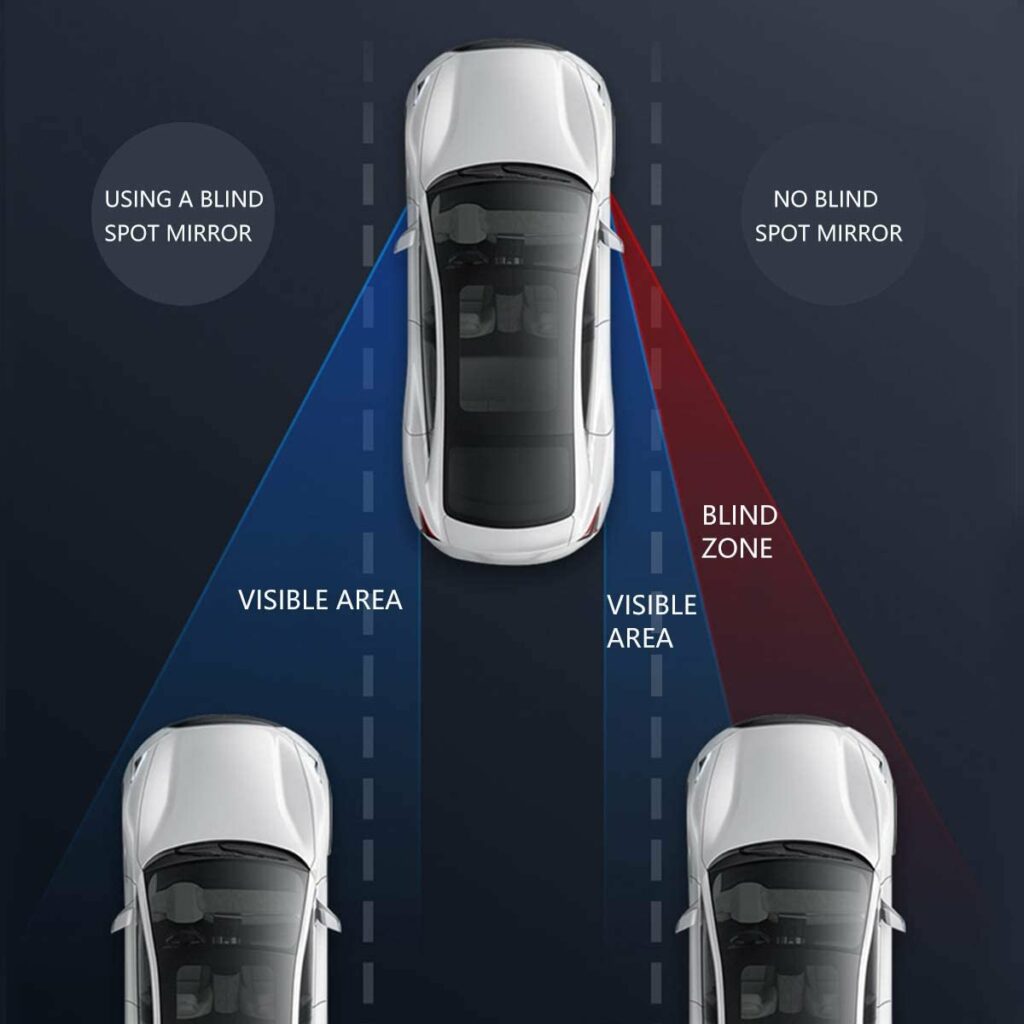
The concept of blind spots is omnipresent on the roads. They are those elusive zones where your vision fails, often invisible until it’s too late. Just as a symphony requires each instrument to play its part, a driver should not navigate these hidden perils alone. Blind spot mirrors stand sentinel, extending the driver’s field of vision and illuminating areas that would normally remain shrouded in darkness.
Understanding the functionality of blind spot mirrors is foundational to appreciating their value. Typically, they are small convex mirrors positioned on the side mirrors of vehicles. Their curvature serves a dual purpose: it magnifies the view of the adjacent lane while also broadening the field of vision. This seemingly simple modification transforms the way drivers perceive their surroundings—transitioning from a two-dimensional view to a more encompassing panorama.
Imagine sailing on the open seas. A adept sailor leans into the wind, eyes scanning the horizon for shifting weather patterns or lurking hazards. Similarly, a driver equipped with blind spot mirrors extends their vision beyond the confines of their car’s traditional mirrors. They gain an invaluable asset in avoiding potential catastrophes in the blink of an eye. It’s not merely about convenience; it’s about cultivating a culture of proactive safety.

Statistical evidence supports the claim that blind spot mirrors significantly enhance road safety. Research indicates that a substantial percentage of fatalities in vehicular accidents stem from lane-change collisions—issues deeply intertwined with blind spots. By integrating these mirrors, one can dramatically reduce the risk of such accidents. Their inclusion becomes a tangible shield against the unpredictability of the road—a striking contrast to the earlier failures of perception that often lead to distressing consequences.
Moreover, blind spot mirrors provide an added advantage for novice drivers, who may not yet possess an instinctive sense of spatial awareness on the road. These mirrors serve as a guiding compass, helping to build confidence while honing driving abilities. They guide learners to comprehend the dimensions of their vehicle in relation to their surroundings; a gentle reminder that awareness is a skill that requires refinement and practice.
In a world where distractions proliferate—be it smartphones lighting up with notifications or the cacophony of passenger chatter—blind spot mirrors emerge as an oasis of focus. They necessitate a commitment to vigilance, urging drivers to remain acutely aware of their environment. Engaging with these mirrors fosters the habit of continuous scanning, whereby the driver is routinely prompted to assess the traffic around them before executing maneuvers such as lane changes or merges. This practice goes beyond mere convenience—it’s an exercise in cultivating a mindset dedicated to safety and awareness.
The aesthetic impact of blind spot mirrors also warrants attention. In a society where vehicles serve as extensions of personal identity and style, these mirrors can be an attractive addition. Many modern designs seamlessly integrate with vehicle lines, enhancing overall appeal while maintaining functionality. They offer a fusion of form and function, enabling drivers to encapsulate both safety and style in their automotive experience.
However, one must acknowledge the nuances of utilising blind spot mirrors effectively. While they considerably broaden the driver’s field of awareness, there’s a paradox of reliance that must be addressed. Overdependence on these mirrors can lead to complacency. Drivers must remain vigilant, using blind spot mirrors as one tool in a multifaceted approach to safe driving. Like a skilled general surveying a battlefield, a driver must employ every resource—turning their head, adjusting their seat, and, crucially, trusting their instincts to pilot their vehicle with skill and prudence.
Transitioning from theory to practice, fostering a mindset that embraces the use of blind spot mirrors can ripple outwards into broader driving culture. By championing their integration within educational programs for new drivers, we can propagate a safer driving environment for everyone. It’s a call to action, a suggestion that the future of road safety lies not just in technology but in collective awareness and proactive adaptation.
Moreover, the optimal positioning of blind spot mirrors cannot be overstated. Each driver must take the time to adjust the angle of these mirrors to suit their specific needs. A correctly adjusted mirror can make the difference between a secure lane change and a potentially perilous encounter. This fine-tuning transforms the mirrors into an extension of the driver’s awareness, ensuring that no area is left unexplored.
In closing, the impact of vehicle blind spot mirrors on driving safety is a testament to the power of simple innovations. They embody the philosophy that sometimes, the smallest changes can yield the most significant benefits. Just as the delicate balance of a tightrope walker requires exquisite focus and an awareness of all surroundings, so too does driving necessitate a commitment to safety and vigilance. The next time you embark on a journey, let your blind spot mirrors serve as both your allies and your guardians—illuminating paths that would otherwise remain unseen, enhancing your driving experience, and, most importantly, safeguarding you and those around you on the open road.
FAQ
What are blind spot mirrors?
Blind spot mirrors are small convex mirrors attached to vehicle side mirrors that expand the driver’s field of vision, helping to detect vehicles in blind spots.
How do blind spot mirrors improve safety?
They significantly reduce the chances of accidents caused by lane changes by providing a wider view of surrounding traffic.
Are there any disadvantages to using blind spot mirrors?
Overreliance on blind spot mirrors can lead to complacency; they should be used alongside other safety measures.




Leave a Reply