Short Answer
Embarking on the journey of orthodontics often invites a multitude of emotions, with enthusiasm tempered by trepidation. The anticipation of achieving a perfect smile, however, is often shadowed by the apprehension surrounding braces pain. As one prepares for this transformative experience, the question arises: how long does this discomfort truly last? Understanding the intricacies of braces pain not only prepares individuals for what lies ahead but also unveils strategies for relief, ensuring a smoother trajectory through the orthodontic process.
Initially, it is essential to acknowledge the multifaceted nature of braces discomfort. This sensation can vary significantly from one individual to another, predominantly influenced by factors such as personal pain tolerance, the complexity of the dental issues being corrected, and even the type of braces employed. Generally, the onset of pain occurs shortly after the braces are fitted or adjusted, as the teeth begin to shift into their new positions. Within the first few days, one might experience an acute, throbbing sensation as dental ligaments and jaw structures adjust to their new alignment.
Typically, this initial phase of discomfort can linger anywhere from three to seven days. During this period, the pain might feel intense but tends to diminish as the body habituates to the corrective apparatus. New wearers often describe the sensation as akin to a dull ache or pressure, which, while uncomfortable, usually subsides as each day passes.
So, what can one do to alleviate this discomfort? The next section explores proactive relief strategies that can significantly enhance the orthodontic experience.
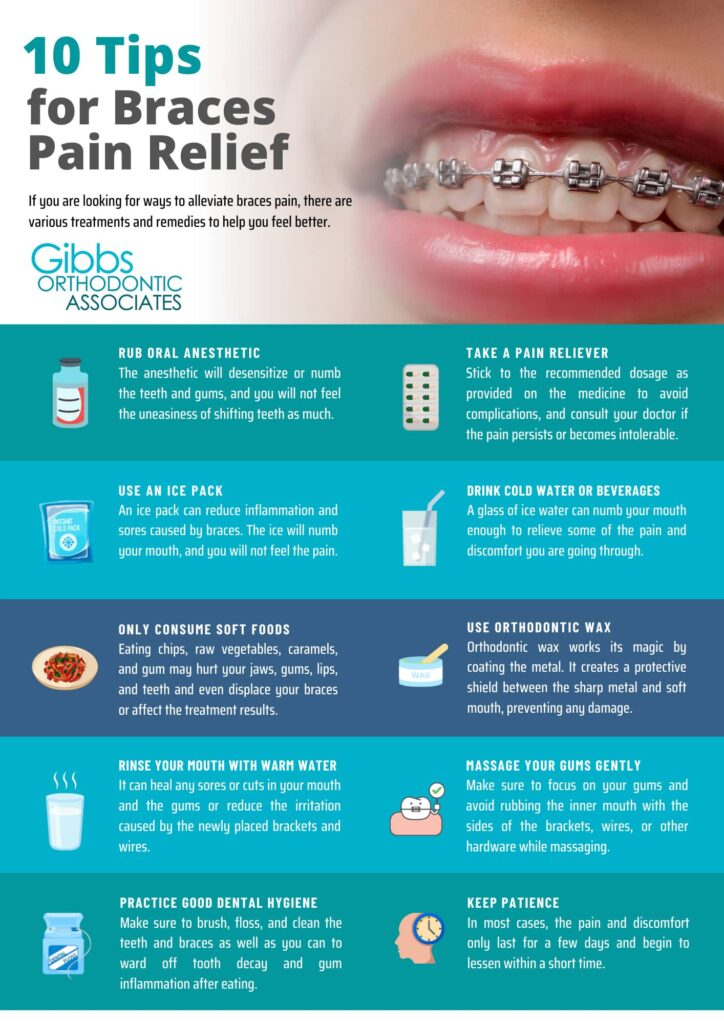
1. Opt for Soft Foods: Transitioning to a diet predominantly composed of soft foods can greatly mitigate pain levels. Foods such as yogurt, mashed potatoes, smoothies, and soups are excellent choices. These options not only minimize discomfort but also provide essential nutrients to aid overall health during this adjustment phase.
2. Ice Packs and Heat Therapy: Employing an ice pack on the cheeks can numb the painful area and reduce swelling. Alternatively, a warm compress may also prove beneficial, as it helps relax the muscles around the jaw, imparting a soothing effect.
3. Over-the-Counter Pain Relievers: Non-prescription analgesics, such as ibuprofen or paracetamol, can be quite effective in alleviating pain during the initial adjustment phase. These medications can provide significant relief, allowing individuals to resume their daily activities with minimal interference.
4. Orthodontic Wax: For those irritable moments when brackets or wires rub against soft tissues, orthodontic wax serves as a protective barrier. Applying a small amount of wax over the offending bracket can reduce abrasions and enhance comfort.
5. Stay Hydrated: Evidence suggests that staying hydrated can stave off discomfort. Water proffers inherent benefits by maintaining oral moisture, which can ease any potential soreness and contribute positively to overall oral health.
6. Keep Up with Oral Hygiene: Maintaining impeccable oral hygiene is paramount during orthodontic treatment. Brushing gently around brackets and using an antibacterial mouthwash can prevent irritation and infection, further alleviating potential sources of pain.
As the days progress, individuals may begin to notice a reduction in discomfort, yet many wonder about the timeline for recovery in a broader sense. The orthodontic journey consists of several phases, each marked by notable adjustments and occasional discomfort.
In the weeks following the initial adjustment, patients can expect to encounter a series of follow-up appointments, during which the orthodontist will tighten the braces or replace rubber bands. Each adjustment often comes with its own brief spell of pain, typically lasting a few days once more. However, as the overall treatment progresses, the severity and duration of discomfort often decrease.
It is also vital to consider the psychological impact of braces pain. For many, the anticipation of discomfort can evoke anxiety, leading to stress that amplifies the perception of pain. By adopting a mindset geared toward viewing braces as an investment in future confidence, one can significantly shift their pain perspective. This paradigm shift can foster resilience, transforming transient suffering into an empowering experience that is ultimately worth the price.
As the treatment continues, patience becomes essential. The entire process of wearing braces may take several months to years, navigating through phases of discomfort, pain relief, and ultimately the euphoria of a beautifully aligned smile. Knowing that each uncomfortable moment is a stepping stone toward a long-desired outcome can provide solace during trying times.
In conclusion, braces pain is a temporary yet challenging facet of the journey toward orthodontic alignment. By understanding its duration, implementing effective relief strategies, and fostering a positive mindset, individuals can navigate this process with greater ease. The path taken may be lined with transient discomfort, but the end result—a confident, radiant smile—makes every moment worthwhile.
FAQ
How long does pain from braces typically last?
Pain from braces usually lasts between three to seven days after they are fitted or adjusted.
What are some effective ways to relieve braces pain?
Effective relief strategies include opting for soft foods, using ice packs, taking over-the-counter pain relievers, applying orthodontic wax, and maintaining good oral hygiene.

Leave a Reply