Short Answer
In the tangled tapestry of law, acts of omission loom larger than mere absence—they are pivotal moments when the failure to act carries significant consequences. Think of it as a shadow lurking behind the decision not to engage, where inaction speaks volumes. This phenomenon invites not only legal discourse but also ethical contemplation. Understanding acts of omission requires delving into their legal meaning, accompanied by tangible real-life examples that illuminate their complex nature.
Defining Acts of Omission
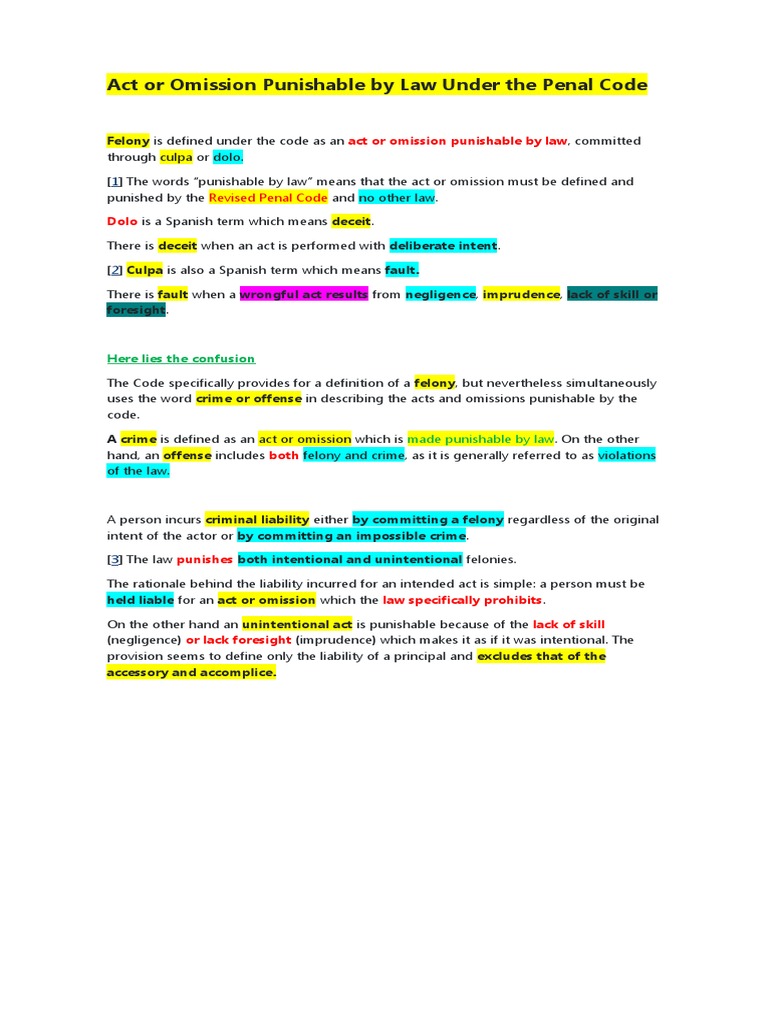
Acts of omission, simply put, refer to situations where an individual fails to take action when there is a legal duty to do so. In law, this nonfeasance can often lead to liability, functioning as a counterbalance to the idea of volitional wrongdoing. The legal definition posits that an act is a failure to act in a manner that could prevent harm, owing from a duty of care to another party. The concept weaves its way through various legal doctrines, including tort law, and criminal law, where the implications can ripple through lives like a stone cast into a still pond.
Civil Liability: The Duty of Care
Within the realm of tort law, acts of omission can trigger civil liability when one party breaches their duty of care to another. Consider the scenario of a lifeguard on duty. If that lifeguard fails to rescue a swimmer in distress, the breach of duty could result in tragic consequences. This act of omission carries moral weight and potential legal repercussions. Here, the absence of action can be equally as damning as a proactive wrongdoing, reinforcing the notion that inaction can lead to dire consequences.
The crux of understanding acts of omission lies in the articulation of negligence. When an individual does not meet the standard of care expected in their role, whether as a healthcare provider or a caregiver, their failure to act can culminate in legal liability. A classic example resides in the medical field. If a doctor neglects to provide necessary treatment for a patient experiencing severe symptoms and that patient subsequently suffers a grave outcome, the doctor may be held liable for negligence. The act of omission here is stark; it reveals the profound ethical responsibility that underpins professional duties.
Criminal Liability: When Inaction Equals Crime
Interestingly, the scope of acts of omission extends beyond civil liabilities, entering the realm of criminal law. Certain jurisdictions hold individuals criminally liable for failing to act in specific circumstances. For instance, consider a parent who witnesses their child being attacked but fails to intervene or call for help. In scenarios such as these, the law may prescribe punitive measures, reflecting the societal expectation that individuals protect those who are vulnerable.
This expectation illuminates the ethical underpinning of legal principles. The notion that one must act when faced with peril—particularly when a moral duty exists—brings forth the idea that nonaction can lead to criminal culpability. It converts a silent bystander into a pigeonhole for potential liability, blending law with ethical obligation.
Another poignant illustration of criminal acts of omission can be drawn from the realm of Good Samaritan laws. In many jurisdictions, these statutes protect individuals who choose to help others in emergencies. However, the absence of a statutory requirement to assist does not shield one from moral scrutiny. For example, a passerby witnessing a car accident may not be legally obligated to assist the victims; however, societal norms would likely condemn any notable inaction, hinting that moral laws often parallel legal statutes. Here, the act of omission transcends the courtroom, embedding itself into the very fabric of societal expectations.
Real-Life Examples of Acts of Omission
One striking real-life illustration involves the case of a teacher who failed to report suspected child abuse. Upon noticing the signs of distress in a student, this act of omission—rooted in the duty to protect and advocate for the welfare of children—can lead to legal actions against the teacher. The requirement for educators to report concerns is not merely procedural; it embodies a profound moral and legal responsibility that, when neglected, carries grave consequences.
Similarly, a more harrowing instance involves emergency responders at the scene of a crime who choose to stand by without intervening. If a person is being assaulted and those nearby fail to call the authorities or attempt to assist, they may face legal repercussions. This situational omission not only raises questions of legality but also ethical imperatives that resonate within communities. The concept here ascends beyond the confines of legal dictionaries, echoing the philosophical inquiries regarding civil responsibility and societal cohesion.
The Broader Implications of Acts of Omission
The examination of acts of omission stirs turbulent waters within the legal landscape. It provokes reflection upon what it means to embody responsibility, both legally and socially. In a world where negligence can often appear indistinct from reasonable inaction, the legal framework strives to delineate these boundaries—ensuring that individuals are held accountable not only for their deeds but also for their failures to act. This duality serves as a stark reminder of the weighty responsibilities inherent in human relationships. In many cases, the act of doing nothing reverberates throughout legal corridors, challenging perceptions of duty, morality, and consequence.
In conclusion, acts of omission represent a nuanced area of law that bridges civil and criminal spheres. Their implications extend well beyond courtrooms—shaping societal expectations and urging individuals towards proactive engagement in the welfare of others. By fostering a greater awareness of these responsibilities, we contribute to a more empathetic society where inaction does not still the winds of duty and humanity.
FAQ
What are acts of omission?
Acts of omission are failures to act when there is a legal duty to do so, which can lead to liability.
What is the difference between civil and criminal acts of omission?
Civil acts of omission involve failing to meet a duty of care, while criminal acts of omission can lead to criminal liability for failing to act in specific circumstances.




Leave a Reply